

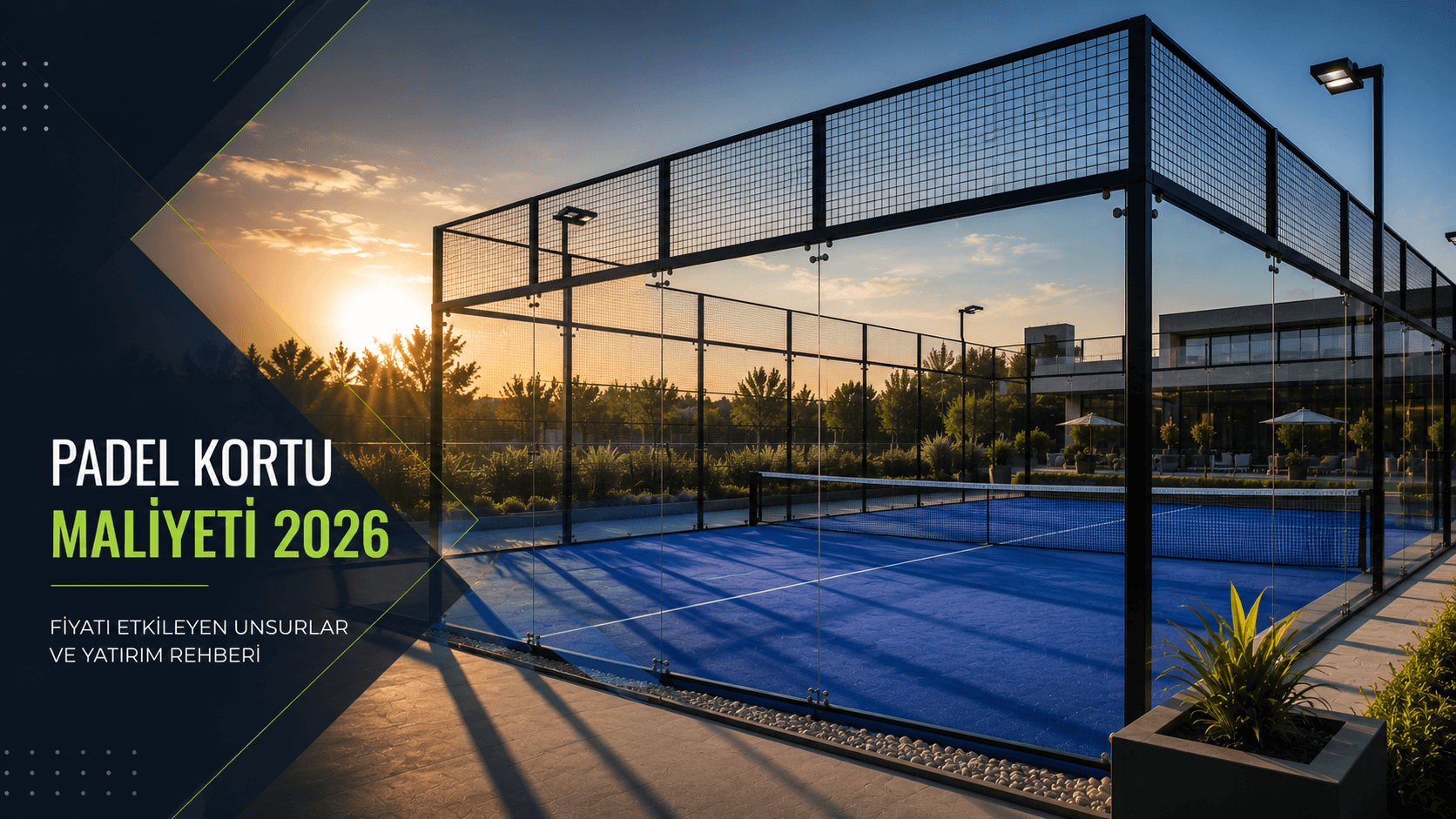
As padel continues to grow rapidly worldwide, more sports clubs, hotels, municipalities, universities, residential developments, and private investors are planning new court projects. One of the first questions during the planning stage is the overall padel court cost.
However, there is no single fixed price for building a padel court. Every project differs depending on its location, structural specifications, material quality, compliance with international standards, and additional equipment.
In this guide, we explain the main factors that influence padel court costs and what investors should consider before starting a project.
A padel court consists of several engineered components that work together to provide durability, safety, and an excellent playing experience. The total investment depends on the specifications of each component.
The primary cost elements include:
Each project has unique requirements, making every investment different.
The steel framework is the backbone of every padel court. The thickness of the steel profiles, manufacturing quality, corrosion protection, and structural engineering all influence the final price.
While lower-quality steel may reduce the initial investment, it can lead to corrosion, deformation, and higher maintenance costs over time.
High-quality galvanized steel combined with durable powder coating provides greater longevity and reduces long-term operating expenses.
The glass panels surrounding a padel court are not only part of its appearance but also an essential safety component.
Professional courts typically use 10 mm or 12 mm tempered glass manufactured according to international quality standards. Premium glass systems improve safety, durability, and the overall playing experience.
The quality of the artificial turf directly affects ball bounce, player comfort, traction, and court performance.
High-quality monofilament turf offers several advantages:
Choosing premium turf often results in lower replacement costs over the lifespan of the court.
Modern padel courts are equipped with professional LED lighting systems that provide uniform illumination while reducing energy consumption.
The overall lighting cost depends on:
Energy-efficient LED systems can significantly reduce operating costs, especially for commercial facilities with extended opening hours.
Ground preparation is often overlooked during the planning stage, yet it represents an important part of the total investment.
The required work may include:
The condition of the installation site directly affects construction costs.
Building multiple courts at the same location generally reduces the average cost per court.
Multi-court projects often benefit from:
For commercial padel facilities, constructing several courts at once usually provides better long-term value.
Indoor padel courts require additional construction compared to outdoor installations.
These additional elements typically include:
As a result, indoor projects generally involve a higher total investment.
Selecting a supplier based solely on the lowest quotation may increase long-term ownership costs.
Lower-quality materials may lead to:
Investing in high-quality materials and experienced manufacturers often delivers better value over the lifetime of the facility.
The padel court cost depends on many technical and structural factors rather than a single fixed price. Steel construction, tempered glass, artificial turf, lighting systems, ground preparation, transportation, and installation all contribute to the total investment.
When planning a new padel facility, investors should focus not only on the initial purchase price but also on durability, playing quality, maintenance requirements, and long-term operational costs. Working with an experienced padel court manufacturer helps ensure a reliable investment, lower maintenance expenses, and a professional playing environment for years to come.