




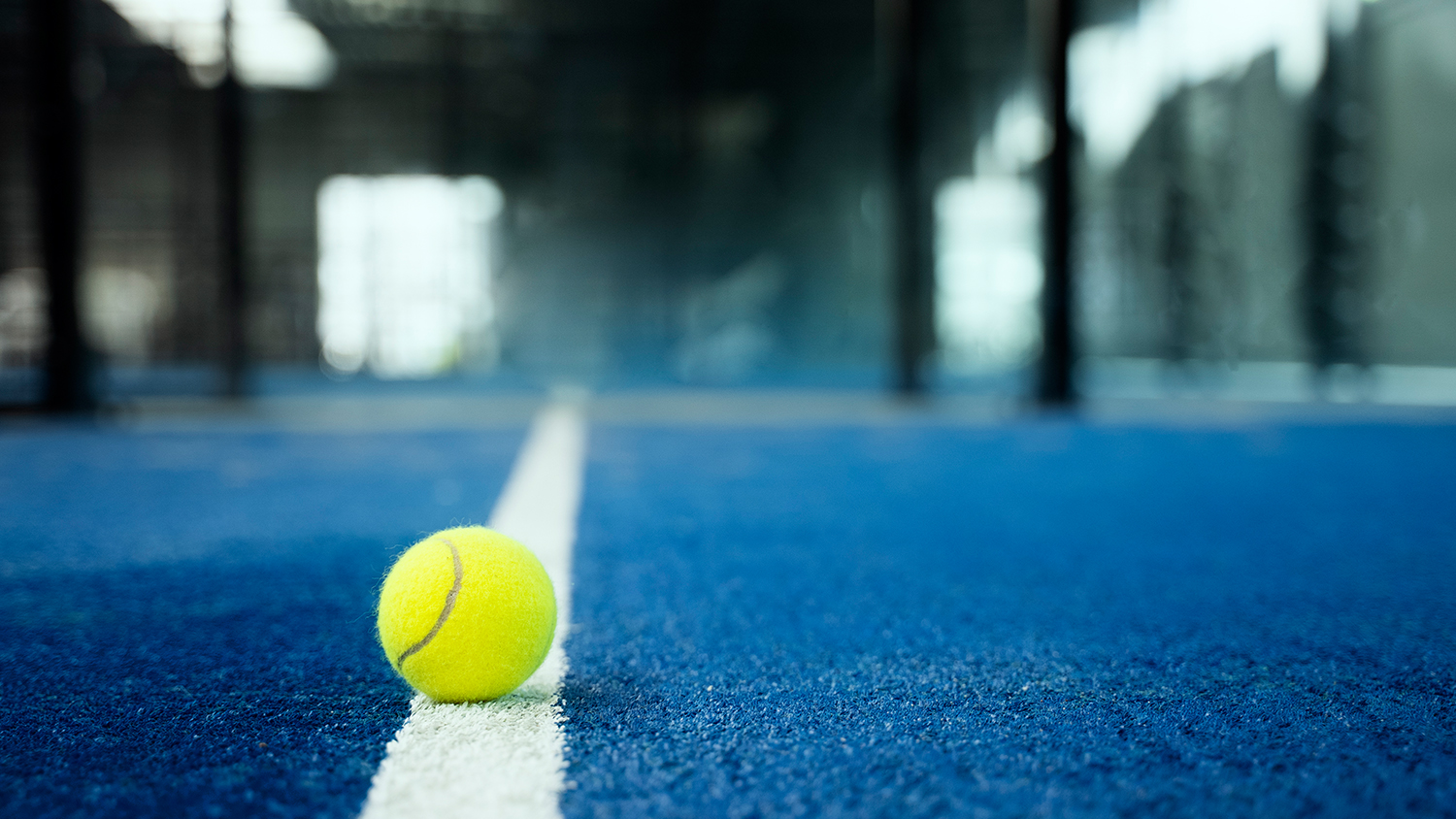
Padel courts are sports areas that stand out with their aesthetic appearance, high playing comfort, and professional usage advantages. However, regular maintenance is of great importance to ensure that a padel court can be used safely, efficiently, and for a long time. For this reason, one of the most important topics for investors, operators, sports clubs, and facility managers is how padel court maintenance is done.
Padel court maintenance is not limited to surface cleaning alone. Many elements, from the turf structure to the glass panels, from the steel construction to the drainage system, need to be checked at certain intervals. On courts where regular maintenance is not carried out, both aesthetic losses and a decline in playing performance may occur. At the same time, the risk of encountering higher repair costs in the future increases.
For this reason, padel court maintenance should be approached not only as cleaning, but as a technical process that protects the value of the investment.
Padel courts are areas that are constantly open for use. Player traffic, weather conditions, dust accumulation, humidity, rainfall, sunlight, and environmental effects may cause wear over time on the court surface and supporting systems. This situation not only damages the appearance of the court but also negatively affects the user experience.
Thanks to regular maintenance:
In short, maintenance is one of the most important practices that protect both the quality of use and the economic value of a padel court.
The first area to pay attention to in padel court maintenance is the turf surface. Because the game takes place directly on this surface and it is the part with the most contact. Over time, leaves, dust, sand, small waste, and environmental residues may accumulate on the turf. These accumulations not only spoil the appearance, but may also affect ball movement and player comfort.
For this reason, the turf surface should be cleaned at regular intervals. Especially on outdoor padel courts, particles carried by the wind may accumulate more quickly. During cleaning, it is important to use equipment that will not damage the turf fibers. Hard and improper applications may cause deterioration of the turf texture.
Thanks to regular cleaning, the court looks more well-maintained and playing performance is preserved more consistently.
In synthetic turf systems used on padel courts, filler material is an important balance element. Over time, due to player movements and usage intensity, this filler may decrease in certain areas or may be distributed unevenly. This directly affects turf performance, ball bounce, and surface comfort.
The filler level should be checked regularly and balanced distribution should be ensured in areas where necessary. Especially in the heavily used parts of the court, the homogeneous structure of the filler may deteriorate. In these areas, it is important to rebalance the surface with a professional maintenance approach.
When filler control is neglected, the court may develop an irregular playing character in a short time. This negatively affects both player satisfaction and the professional perception of the court.
On a padel court, turf fibers may flatten over time depending on the intensity of use. Constant play in the same areas, player movements, and environmental effects may reduce the natural appearance and upright position of the turf fibers. For this reason, the turf fibers should be brushed at regular intervals during the maintenance process.
The brushing process supports a more homogeneous surface appearance while also making a positive contribution to playing performance. At the same time, it helps the filler material to be distributed more evenly. During this process, equipment suitable for padel turf should be used and applications that may damage the surface should be avoided.
A padel court that is brushed regularly both looks more professional and offers more balanced use.
One of the characteristic features of padel courts is the glass panels. These panels both support the flow of the game and give the court a modern appearance. However, over time, dust, water stains, dirt, and environmental residues may form on the glass surfaces. This weakens the aesthetic appearance and may also negatively affect the user experience.
Glass panels should be cleaned regularly. During cleaning, it is important to prefer suitable products that will not damage the glass surface. In addition, not only surface cleaning but also the glass connection points and mounting elements should be checked. If there are risks caused by loosening, cracks, or impacts, they should be detected at an early stage.
Regular inspection of glass systems is of great importance both for safety and for long-lasting use.
The steel construction system, which is the supporting skeleton of the padel court, is also an important part of the maintenance plan. Especially on outdoor courts, rain, humidity, temperature differences, and external environmental conditions may cause wear on metal surfaces over time.
For this reason, the following checks should be carried out regularly on the steel components:
Small problems detected early can prevent larger structural issues. Especially in heavily used areas, periodic technical inspection is indispensable for court safety.
On outdoor padel courts, the drainage system is of great importance. The inability to discharge rainwater or water accumulated on the surface quickly may negatively affect both the turf structure and the court ground. In areas that remain damp for a long time, turf performance may decrease, ground quality may deteriorate, and usage comfort may decline.
For this reason, water discharge lines around the court, drainage points, and ground slope should be checked regularly. If situations such as blockage, water accumulation, or insufficient flow are detected early, larger problems can be prevented.
A healthy drainage system on a padel court is not only a matter of maintenance convenience, but also a decisive factor in the lifespan of the court.
When padel court maintenance is mentioned, usually only the ground and surrounding structures are considered. However, lighting systems are also an important part of court quality. Especially on courts used in the evening, projectors must work efficiently.
Lighting poles, fixtures, connection elements, and light quality should be checked regularly. Weakening lighting may reduce player comfort and decrease court usage efficiency. In addition, wear caused by weather conditions may occur over time in outdoor systems.
When lighting maintenance is carried out regularly, the court offers both safer and more professional use.
The most correct approach in padel court maintenance is to carry out procedures in a planned manner rather than randomly when needed. Daily, weekly, and periodic maintenance practices should be considered together.
Thanks to this planning, the court is protected in a more controlled way and the possibility of encountering sudden problems decreases.
The climate conditions of the region where the padel court is located also affect the maintenance process. On outdoor courts, leaf accumulation in autumn, humidity and rainfall in winter, and intense sunlight and dust in summer may become more pronounced. For this reason, maintenance practices should be replanned according to seasonal conditions.
For example, during rainy periods, drainage control should be performed more frequently, while in summer, the turf surface and color durability should be monitored more closely. In windy regions, environmental residues may accumulate more intensely, so surface cleaning may be required more often.
Creating a maintenance program suitable for the environment where the court is located helps preserve the performance of the padel court for a longer time.
Padel court investments are not limited only to the installation stage. What is truly important is preserving the court as close as possible to its first-day performance. For this, regular and conscious maintenance is essential.
The answer to the question of how padel court maintenance is done requires addressing many topics together, such as turf cleaning, filler control, glass maintenance, steel construction inspection, drainage monitoring, and lighting control. When all of these elements are evaluated within a regular maintenance plan, the court becomes safer, more aesthetic, and longer-lasting.
Thanks to correct maintenance practices, a padel court not only preserves its current performance, but also strengthens return on investment in the long term. For this reason, the maintenance process should be seen as one of the most important parts of padel court operation.