




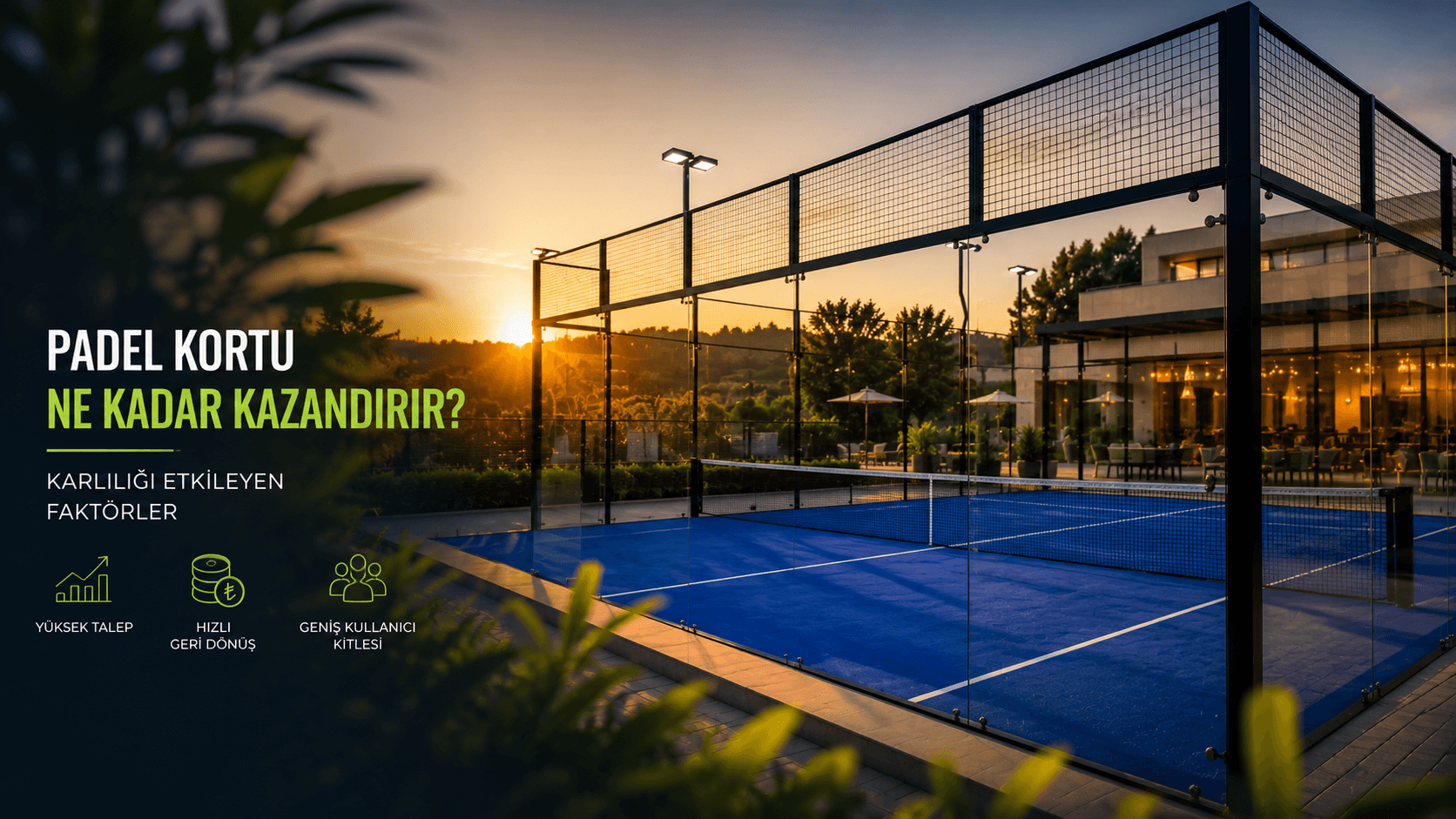
The rapid global growth of padel has created attractive investment opportunities for entrepreneurs, sports clubs, hotels, municipalities, and real estate developers. As interest in the sport continues to rise, one question is frequently asked by potential investors: How much can a padel court earn?
There is no universal answer because the profitability of a padel court depends on several operational and market factors. Court location, occupancy rate, pricing strategy, customer demand, operating expenses, and additional revenue streams all influence financial performance.
This guide explains the factors that determine padel court profitability and how investors can maximize long-term returns.
Like any commercial sports facility, the profitability of a padel court depends on effective planning and management rather than construction alone.
A professionally designed facility in a location with consistent player demand has the potential to generate stable recurring revenue throughout the year. Many successful facilities combine court rentals with coaching, tournaments, memberships, and additional services to diversify income.
Several key elements determine how much revenue a padel court can generate.
Facilities that maintain high occupancy during evenings and weekends generally achieve stronger financial performance.
The success of a padel business begins with selecting the right location. Courts positioned near residential communities, sports complexes, universities, hotels, and business districts generally benefit from greater accessibility and a broader customer base.
Easy parking, convenient transportation, and nearby complementary services can also improve visitor numbers and customer retention.
Many investors choose to build more than one court within the same facility.
Multi-court venues offer several operational advantages:
Sharing infrastructure and operational resources across multiple courts can also improve overall business efficiency.
Successful padel clubs often generate income from more than just hourly court bookings.
Additional revenue opportunities include:
Diversifying income sources can help reduce seasonal fluctuations and strengthen long-term profitability.
Player satisfaction is one of the strongest drivers of repeat bookings and referrals.
A quality customer experience is influenced by:
Well-maintained facilities encourage players to return frequently and recommend the venue to others.
Revenue alone does not determine profitability. Operating expenses should also be carefully managed.
Typical operating costs include:
Energy-efficient LED lighting and durable construction materials can help reduce long-term operating costs.
Maximizing profitability requires more than building a court. Investors should develop a comprehensive business strategy before opening.
Recommended practices include:
Padel is one of the fastest-growing racket sports worldwide. New clubs, sports centers, hotels, residential projects, and recreational facilities continue to add padel courts as demand increases.
This growing popularity creates new opportunities for investors who focus on quality construction, excellent customer service, and sustainable business operations.
The answer to "How much can a padel court earn?" depends on many variables, including location, occupancy, pricing, operating efficiency, and customer satisfaction. While no fixed income figure applies to every project, professionally managed facilities with strong demand and diversified revenue streams can become sustainable long-term investments.
Choosing a reliable padel court manufacturer, investing in high-quality construction, and creating an attractive playing environment are among the most important factors influencing long-term business success.