




Padel is one of the fastest-growing racket sports in recent years, attracting attention with its dynamic structure and similarities to tennis and squash. It is easy to learn, enjoyable to play and highly social, making it popular among both amateur players and professional athletes. The question how to play padel is one of the most common topics researched by people who are new to this sport.
Padel is generally played in doubles on a special court surrounded by glass walls and metal mesh. Although it shares certain similarities with tennis, its court structure, wall usage and serving rules create a different playing experience. For this reason, before starting padel, it is important to understand the basic logic of the game, court layout, scoring system and essential rules.
Padel is a racket sport played with a padel racket and a special padel ball. It requires strategy, reflexes, balance and teamwork. The game is played on an enclosed court divided by a net. Unlike tennis, the surrounding glass walls are part of the game, and the ball can remain in play after bouncing off these walls under certain rules.
A standard padel court is generally 10 meters wide and 20 meters long. The net is positioned in the middle of the court, and players aim to send the ball into the opponent’s side. Padel is mostly played in teams of two, in a 2-on-2 format. Although singles padel courts also exist, doubles is the most common form of the game.
You do not need extensive equipment to play padel. A padel racket, padel ball, suitable sports shoes and comfortable sportswear are generally enough to get started.
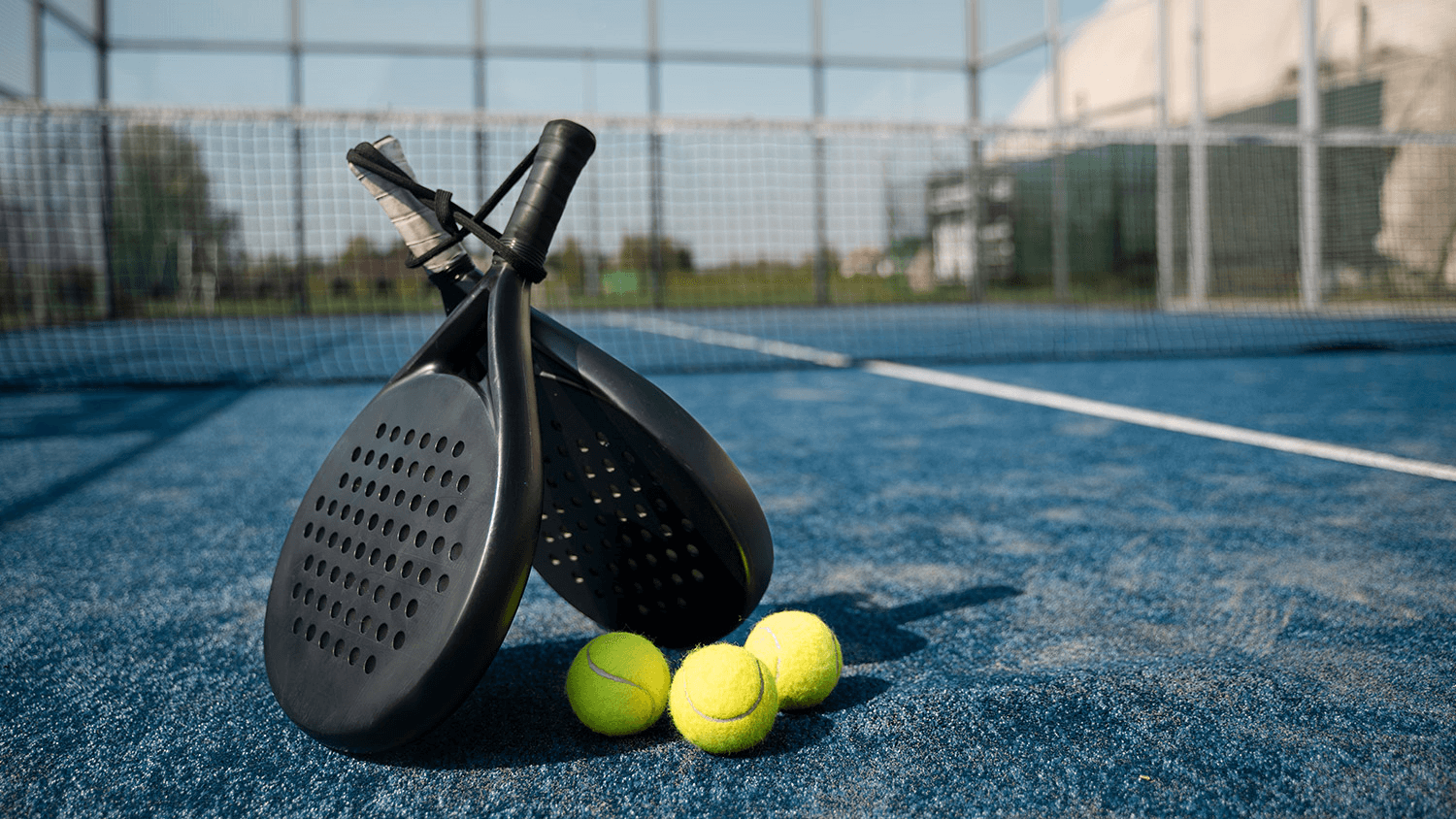
A padel racket is different from a tennis racket. It has a solid, perforated surface instead of strings and usually comes with a shorter handle. This structure provides better control during the game. Padel balls look similar to tennis balls, but they may differ in terms of pressure and bounce characteristics.
Shoe selection is also important for performance and safety. Since padel involves sudden direction changes, short sprints and sliding movements, shoes with suitable soles for padel court surfaces should be preferred.
The padel court is one of the main elements that defines the character of the game. It has a rectangular structure and is surrounded by glass panels and metal mesh. The back and side glass walls allow the ball to bounce and remain in play. This is one of the key features that separates padel from many other racket sports.
The net is located in the center of the court. Service boxes are placed on both sides. During service, players must send the ball diagonally into the opponent’s service box. The court surface is usually made of artificial turf, and special sand-filled systems may be used to improve playing comfort.
The main objective in padel is to send the ball into the opponent’s court in a way that makes it difficult or impossible for them to return. The ball must pass over the net and land in the opponent’s side according to the rules. Players can hit the ball directly or wait for it to bounce off the glass wall before returning it.
After the ball lands in the opponent’s court, it may bounce off the glass wall and the rally can continue. However, if the ball hits the glass or metal mesh before touching the ground on the opponent’s side, the point is lost. Therefore, the ball must first touch the opponent’s court surface.
Padel is not only based on powerful shots. Positioning, angle control, teamwork and patient rally construction are also highly important. This allows beginners to enjoy long rallies even at an early stage.
The serve in padel is different from tennis. It must be performed underhand, and the ball must be hit below waist level. Before serving, the player bounces the ball on the ground and then sends it diagonally into the opponent’s service box.
The basic serving rules in padel are as follows:
If the serve touches the net and still lands in the correct service box, it is usually considered a let and the serve is repeated. However, if the serve goes directly toward the metal mesh, it may be counted as a fault. In padel, the serve is not only used to start the point but also to enter the rally with a controlled and effective angle.
The scoring system in padel is similar to tennis. Points progress as 15, 30, 40 and game. If both teams reach 40, the score becomes deuce. In this case, the advantage system may be applied, or some tournaments may use a deciding point system.
A set is usually played over 6 games. The team that reaches 6 games with at least a two-game lead wins the set. If the score reaches 6-6, a tie-break may be played. Matches are generally played as best of 3 sets, and the team that wins 2 sets wins the match.
This scoring system makes padel more competitive. However, in amateur games, players may prefer shorter sets or time-limited match formats.
One of the most distinctive features of padel is the use of glass walls during play. After the ball lands in the opponent’s court, it can bounce off the glass wall, and the player can still return it. This gives the game a more strategic and enjoyable structure.
For example, a ball coming from the opponent may land on your side, hit the back glass and return toward the court. In this case, the ball can be returned before it touches the ground for a second time. Balls bouncing from the side glass can also be used during the rally.
However, if the ball hits the glass or mesh directly without first touching the ground, it is considered a fault. For this reason, shot angle and timing are very important in padel.
Different shot techniques are used in padel. For beginners, learning the basic shots is usually enough to start playing comfortably.
In padel, hitting the ball hard is not enough on its own. Sending the ball to the right area, forcing opponents out of position and sharing the court effectively with your partner are often more important than power.
Since padel is played in doubles, court positioning is extremely important. Players should not move independently from each other. Moving forward together, stepping back together and avoiding open spaces in the middle of the court are among the basic principles of the game.
During defense, players usually position themselves closer to the back glass. During attack, they move toward the net to put pressure on the opponents. However, staying too close to the net without control may create problems against lob shots.
Successful padel requires strong communication between teammates. Deciding who will take the ball, how to cover the middle area and how to use the opponent’s open spaces can directly affect the result of the match.
Beginners should first focus on getting used to the rhythm of the game. Instead of trying to hit powerful shots at the beginning, it is better to keep the ball in play. In padel, one of the most effective ways to win points is to force the opponent into making mistakes.
Controlled serving, avoiding frequent net errors and using the diagonal service area correctly are important for beginners. Getting used to balls bouncing off the glass may also take time. Therefore, practicing wall usage during training can be highly beneficial.
Another important point is racket grip. The padel racket should not be held too tightly, and wrist movements should remain controlled. Excessive power can make ball control difficult. Instead, balanced, short and controlled shots should be preferred.
One of the main reasons padel has become so popular is that it is easy to learn. Compared to tennis, the court is smaller, the racket offers more control and the ball can stay in play for longer periods. This allows beginners to enjoy the game in a short time.
However, padel becomes deeper as the player improves. While basic rules are enough at the beginner level, advanced play requires stronger tactics, positioning, shot variety and reflexes. This makes padel suitable for both recreational players and competitive athletes.
Padel is an enjoyable sport that supports physical fitness. It involves short-distance running, sudden changes of direction, reflex movements and coordination, helping to activate many parts of the body. It is also a highly social sport, which makes it popular among friend groups, sports clubs and recreational facilities.
Playing padel regularly may support endurance, balance and coordination. Its team-based structure can also improve communication skills and strategic thinking. Although it has a dynamic tempo, it can be played by different age groups because it is relatively easy to learn.
The answer to the question how to play padel becomes quite simple once the basic rules are understood. The game is based on sending the ball into the opponent’s court, keeping the rally alive and forcing the opponent to make mistakes. What makes padel unique is the use of glass walls, doubles format and strong strategic structure.
Anyone who learns the serving rules, scoring system, court structure and basic shots can start playing padel in a short time. With the right court, proper equipment and regular practice, padel offers both an enjoyable and improving sports experience. For those looking for a social, active and easy-to-adapt sport, padel is a strong alternative.