




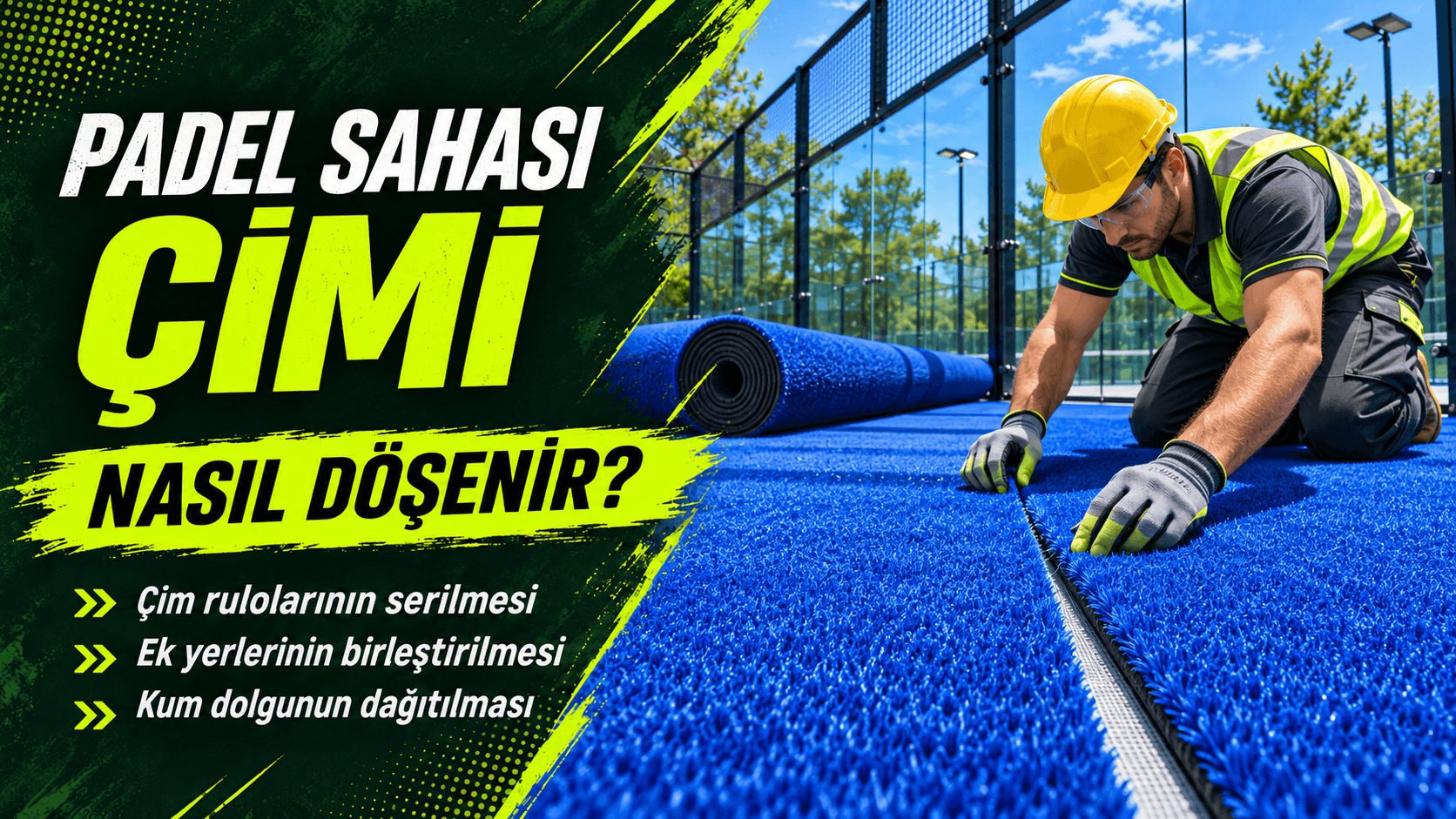
Padel court turf is laid on an accepted base according to a layout plan. The installer unrolls the material, aligns the pile direction, trims the edges and secures the seams using the method specified for the system. After checking the playing lines, the team applies any infill the product requires. At handover, the operator should walk the court with the installer and inspect the seams, lines and the areas players will use most often.
Before laying begins, the installer matches the roll labels to the layout plan. The team needs to know which piece will meet the service line and which will sit by the entrance before making any cuts. Once a roll is open, the installer marks any persistent crease or sign of transit damage and follows the product instructions for preparing the material.
This is also the time to check the pile direction. Two adjacent lengths laid in opposite directions may reflect light differently, making the court appear to have two shades when viewed from one end. Looking across the loose-laid turf from both baselines is a simple way to spot the difference before the seams are secured.
The installer first dry-fits the adjacent lengths. The edges should meet without overlap or gaps, and the fibres should be clear of the joint. Where a system uses seaming tape and adhesive, both must be compatible with the turf backing. The team follows the specified working and curing times for the temperature and moisture conditions on site.
Some products have integral markings, while others use separate strips for playing lines. For separate strips, the installer checks the measurements before bonding. Take a close look where the centre service line meets the service line. Even a line that looks straight from a distance needs a check for lifting or an open edge at the junction.
For a sand-filled surface, the product data sheet specifies the sand grade and application rate. The installer distributes and brushes in the infill as directed. During the handover walk, look closely at the entrance, the service areas and the edges next to the glass. If you see bare strips or small piles of sand, ask the installer to check the distribution before opening.
On a new court, the installer can start with the measurements recorded at base acceptance. On an existing court, there is another source of evidence. Players and maintenance staff may know where the ball has been bouncing differently, where water lingers or where an old seam has reopened more than once. Mark those locations on a court sketch before the old turf is lifted. Once it is removed, the team can compare the underside of the covering with the exposed base at each marked spot.
For example, a club may already have paid for two repairs near the same service line. Show the installer that exact spot before opening the new rolls. The team can examine the previous repair, any adhesive residue and the surface underneath. Recording what was found and what was corrected gives the operator a reference once the new surface enters use.
The first is when the rolls are open and the pieces are still loose. The operator can see the product labels, check the orientation of the strips and ask the crew how the playing lines will be set out. Record any question about the product or colour at this stage. Resolving it after the material has been trimmed and joined involves more work.
A second visit can take place once the seams have been made and before infill covers the surface. The crew can point out the joint lines on the court itself. The third visit takes place when the work is complete. Look at the same area from the baseline, from the gate and from inside the court. A band of colour seen from a distance and an open edge seen close up are different observations. When taking photographs, pair an overall view with a close-up that makes the location identifiable.
Players sometimes report that “something feels wrong with the turf”. Staff can ask three short questions while the session is still fresh. Which court was it, which line was closest and what movement brought it to your attention? A report of a raised patch in the service box nearest the gate on court two, noticed during a change of direction, narrows the area considerably. A photograph taken before any intervention gives the installer more information to work with.
Keep a short court log alongside the product sheet from the first maintenance session. Record the brushing date, equipment used and area inspected. If staff discover a lifting seam, take the affected area out of use and contact the installation lead. The installer can select the repair method and confirm when play can resume for the particular product and conditions.
Leave the maintenance team a few photographs from the day of acceptance. If a seam changes several weeks later, the team can compare it with its original appearance and tell the installer exactly which joint needs attention.